

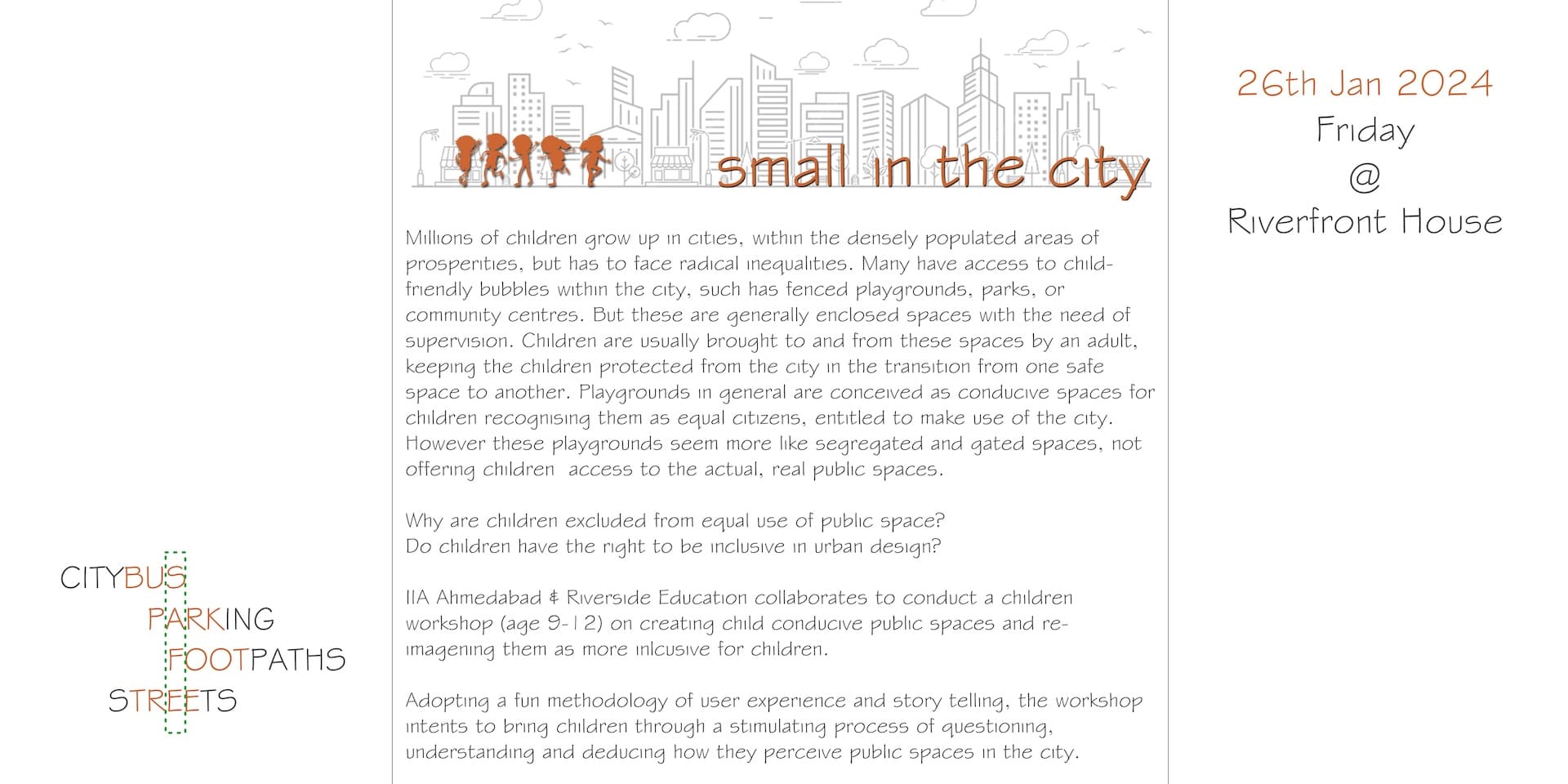
This workshop was conducted with young school students to understand how they perceive and navigate urban spaces at their own scale. Through discussions and creative activities, the children shared their experiences of walking through, interacting with, and identifying different parts of the city from their unique perspective.
Using design thinking as a tool, the workshop positioned children as active contributors to the planning and design process, enabling architects and urban planners to better understand the city through their lens. The exercise challenged conventional assumptions about urban environments and highlighted the importance of recognizing children's needs, experiences, and aspirations in city-making.
More importantly, the workshop questioned whether cities are truly designed with children in mind and explored what young users need to navigate urban spaces safely, comfortably, and independently. The outcomes emphasized the significance of inclusive design at every scale, demonstrating that child-centred perspectives can offer valuable insights for creating more accessible, equitable, and liveable cities for all.


© 2026 rias studio llp.